Water Damage Restoration in Morris County NJ — What to Expect, Start to Finish
What actually happens during a professional water damage restoration in Morris County NJ? Here's the complete process from emergency call to final drying — explained simply.
4/8/20264 min read
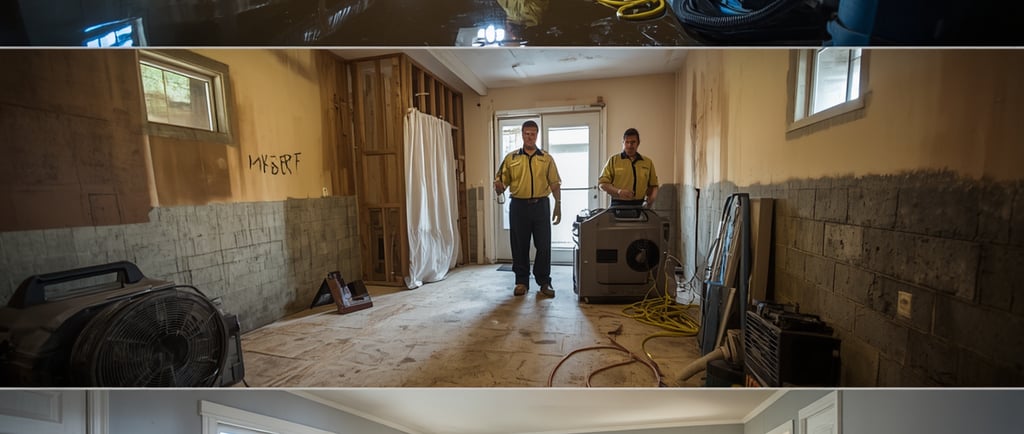
If you've never dealt with water damage before, the restoration process can feel overwhelming and mysterious. What exactly happens after you call a restoration company? How long will it take? Will your house smell? Will your walls need to come down?
We answer these questions every single day for Morris County homeowners who are scared, stressed, and just want someone to be straight with them. Here is a complete plain-English walkthrough of exactly what professional water damage restoration looks like — from the first phone call to the final moisture reading.
The Emergency Call — What Happens When You Call Q Flood Recovery
When you call 862-485-2526 you will speak with a real person immediately — 24 hours a day, 7 days a week. Not a voicemail. Not an answering service. A real friendly human being who understands what you're going through and is ready to help.
We will ask you a few quick questions: what happened, where is the water, how long has it been there, and whether you have turned off the water source. Based on your answers we will give you immediate safety guidance over the phone and get our certified team moving toward your location as fast as humanly possible. We serve Morris County and surrounding areas and we move with urgency — because we know every minute matters when water is spreading through your home.
Step 1 — Assessment and Inspection
When our technician arrives the first thing we do is a complete assessment of the affected area using thermal imaging cameras and professional moisture meters. Thermal imaging allows us to see moisture that is invisible to the naked eye — inside walls, under flooring, above ceilings. This step is critical because water always travels further than it appears. What looks like a wet corner of carpet is often a wet subfloor, wet wall cavity, and wet insulation extending far beyond the visible damage. We document everything we find — every reading, every affected material, every area of concern — before a single piece of equipment is placed.
Step 2 — Water Extraction
Once the assessment is complete we begin extraction immediately. Professional water extraction equipment removes water dramatically faster and more completely than any consumer tool. Depending on the volume of water we may use truck-mounted extraction units, portable extractors, or both. We extract standing water first, then perform detailed extraction of carpet, carpet pad, and any other saturated materials. In many cases carpet pad must be removed and discarded — it holds water like a sponge and cannot be effectively dried in place. We will always discuss this with you before doing it.
Step 3 — Controlled Demolition If Necessary
This is the step that worries most homeowners — and understandably so. In many water damage situations some degree of controlled demolition is necessary to allow proper drying and prevent mold. This typically means cutting drywall at a specific height — called a flood cut — to expose wall cavities to airflow. It may also mean removing baseboards, flooring materials, or insulation that is saturated beyond the possibility of effective drying. We never do more demolition than is necessary and we always explain what we are doing and why before we do it. Everything is documented for your insurance claim.
Step 4 — Equipment Setup and Drying
After extraction and any necessary demolition we set up our drying equipment. A typical residential job involves multiple commercial dehumidifiers, multiple air movers positioned at precise angles to maximize airflow across wet surfaces, and HEPA air scrubbers to maintain air quality throughout the drying process. The specific number and placement of equipment is calculated using psychrometric principles — the science of air, moisture, and drying — not guesswork.
Step 5 — Daily Monitoring and Documentation
Every single day we return to your property, take moisture readings at every monitoring point, record every reading in our moisture log, and adjust equipment placement as needed. We share daily updates so you always know exactly how drying is progressing. You will never be left wondering what is happening in your own home — we believe clear communication is part of the service, not an afterthought.
Step 6 — Equipment Removal and Final Inspection
When our moisture readings confirm that all affected materials have reached their target moisture levels — verified by the same thermal imaging and moisture meters we used on day one — we remove all equipment and conduct a final inspection. We do not remove equipment based on how many days have passed or how things look visually. We remove equipment when the science says the drying is complete. This protects you from the most expensive outcome in water damage restoration — hidden residual moisture that develops into a mold problem weeks after the restoration company has left.
How Long Does It Take?
A typical Category 1 water damage job — clean water from a burst pipe affecting a moderate area — takes between 3 and 5 days of active drying after extraction. Larger jobs, jobs involving contaminated water, or jobs where drying was delayed can take significantly longer. We will give you a realistic timeline estimate after our initial assessment and update you every single day as drying progresses.
Will There Be Odor?
Clean water damage — from pipes and appliances — typically produces minimal odor if addressed quickly. Category 2 and Category 3 water damage involving gray water or sewage can produce significant odor that requires specialized treatment. Our HEPA air scrubbers help manage air quality throughout the process. If odor treatment beyond standard drying is required we will identify this during our initial assessment and include it in our scope of work.
What Happens After Restoration Is Complete?
Water damage restoration — the mitigation phase — stops the damage and returns your home to a dry, stable condition. It does not rebuild what was damaged. If drywall was removed, flooring was torn out, or cabinets were demolished as part of the mitigation process, a separate reconstruction phase is required. Q Flood Recovery can connect you with trusted reconstruction contractors in Morris County who work seamlessly with our documentation and insurance scope to complete your home's recovery from start to finish.
Serving Morris County and Northern New Jersey
Q Flood Recovery provides professional water damage restoration throughout Morris County, Somerset County, and surrounding areas including Morristown, Denville, Randolph, Roxbury, Chester, Mendham, Long Valley, Basking Ridge, Bridgewater, Madison, Chatham, Florham Park, Boonton, Dover, Washington Township, Mount Olive, Flanders, Hopatcong, Pompton Lakes, and Ringwood NJ.
We are your neighbors. We answer every call personally. We move fast because we know what's at stake. And we treat every home and every family we work with the way we would want our own family treated.
Available 24 hours a day, 7 days a week. IICRC Certified. OSHA Compliant. Fully Insured. Hablamos Español.
📞 862-485-2526 | tere@qfloodrecovery.com | www.qfloodrecovery.com
Contact
Get in touch for immediate assistance.
Follow
Connect
+1 862 485 2526
Alternative line (862) 200 7848Alternate
© 2025. All rights reserved.