Sump Pump Failure in NJ — What To Do When Your Basement Floods Anyway
Your sump pump failed during a storm and now your NJ basement is flooded. Here's exactly what to do — and what it means for your insurance claim.
7/1/20264 min read
You spent good money on that sump pump. Maybe you even got the battery backup after the last scare. You did everything you were supposed to do.
And then it rained for two straight days and you came downstairs to four inches of water in the finished basement — the one with the new floors you just put in last year, and your kid's playroom, and the home office where your computer lives.
We're not going to sugarcoat it. This one hurts. And the first few minutes after you find it are genuinely awful. But what you do in the next hour matters a lot — for your home and for your insurance claim.
First: is sump pump failure covered by insurance?
Standard NJ homeowners policies typically do not cover sump pump failure. You need a separate sump pump and water backup rider — usually an inexpensive add-on, often $50 to $150 a year — but a lot of homeowners don't have it because nobody told them they needed it.
If you're reading this after a flood and don't have that coverage, it's a tough situation but not necessarily hopeless. Talk to your adjuster — if there was a contributing storm event, there may still be options worth exploring.
And going forward? Add that rider at your next renewal. Don't skip it.
What to do in the next hour
First figure out why the pump stopped — power issue, stuck float, burned out motor. If it's a power issue and you have a battery backup, switch to it now. Get the water moving out as fast as possible.
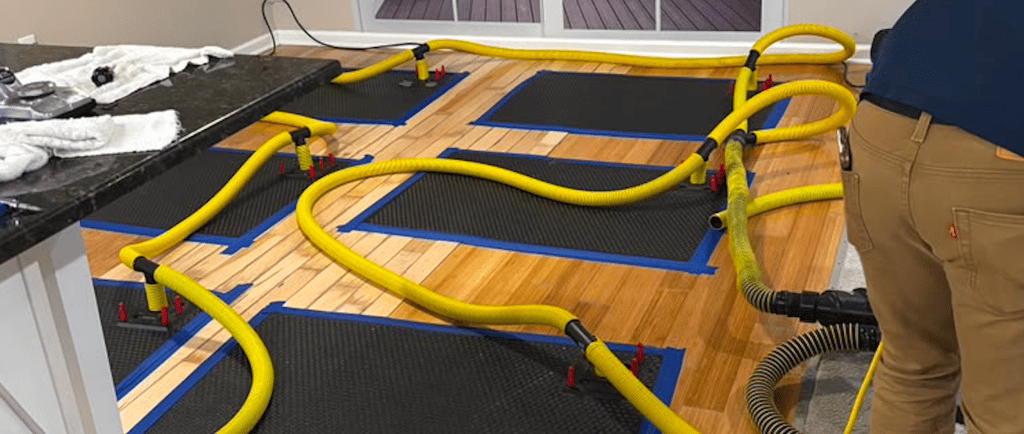
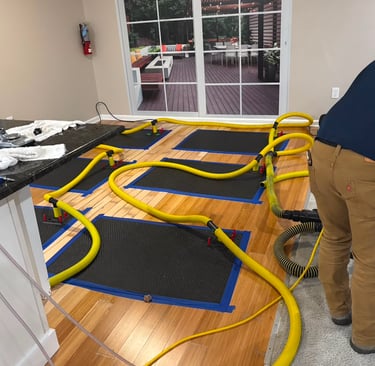
Every hour water sits in a finished basement means more damage to drywall, flooring, furniture, and framing. We use truck-mounted extraction equipment that removes water far faster than any shop vac or rental unit you can get your hands on.
The finished basement reality in Morris County
Most of the basements we work in around here are finished — home offices, playrooms, guest rooms. That means water damage is never just a wet floor. It's flooring, baseboards, drywall, insulation, and sometimes framing. All of it needs to be properly dried and documented before any reconstruction happens.
And yes — if water sat for more than 24 to 48 hours, mold testing may be needed before anything gets rebuilt. We know that's not what you want to hear. But skipping that step causes bigger problems down the road.
We know how stressful this is. We're a local family-run team serving Morris, Essex, Somerset, Passaic, and Union Counties — and we'll pick up the phone any time of day or night.
📞 (862) 200-7848 | (862) 485-2526 🌐 qfloodrecovery.com
-----------------------------------------------------------------------------------------------------------------------------------------------------------
La tormenta pasó. Regresó la luz. Los niños volvieron a la escuela. Crees que lo lograste sin daños — y luego bajas al sótano.
Primero hay un olor. Luego lo ves. Una mancha oscura extendiéndose por la parte baja de la pared, o agua acumulada en una esquina del sótano que no estaba ahí hace dos días. La tormenta no inundó tu casa durante el temporal. Lo hizo en silencio, mientras tú te sentías aliviado de que ya hubiera pasado.
Esto es una de las cosas más comunes que vemos después de las grandes tormentas en los Condados de Morris y Essex. Y también es una de las más frustrantes — porque para cuando lo descubres, el agua ya lleva uno o dos días ahí adentro.
Por dónde suele entrar
En los hogares del Condado de Morris y Essex, los puntos de entrada más comunes después de una tormenta son: penetraciones en el techo alrededor de chimeneas y tragaluces, pozos de ventana que se desbordan, grietas en las paredes del sótano que normalmente no importan, bombas de sumidero que no pudieron con el volumen de agua, y canaletas tapadas antes de que llegara la tormenta.
Ninguno de estos es obvio durante la tormenta. Los descubres después.
La pregunta que todos hacen sobre el seguro
Los daños por agua relacionados con tormentas frecuentemente están cubiertos — pero los detalles importan. El agua que entra por daño directo de la tormenta (una brecha en el techo, una ventana que cedió) generalmente está cubierta. Las inundaciones por agua subterránea y el desbordamiento de la bomba de sumidero son más complicados. Si no tienes una cobertura adicional para inundaciones o para la bomba de sumidero en tu póliza de propietario en NJ, es posible que tengas que pagar de tu bolsillo.
Vale la pena revisar esto con tu agente antes de la temporada de tormentas — no después.
Qué hacer inmediatamente después
Documenta todo antes de tocar cualquier cosa. Fotos y video de cada área afectada, cada pared, cada rincón. Luego llama a tu compañía de seguros y a un equipo de restauración. La documentación que tu equipo de restauración crea en esa primera visita es muchas veces lo que determina si tu reclamo sale adelante o no.
No dejes que nadie te diga que esperes a ver qué pasa. El agua dentro de las paredes no mejora sola — se convierte en moho.
Atendemos a dueños de casa en los Condados de Morris, Essex, Somerset, Passaic y Union. Hemos acompañado a muchas familias locales a través de reclamos de seguro después de tormentas — y siempre contestamos el teléfono. En español también. 🌟
📞 (862) 200-7848 | (862) 485-2526 🌐 qfloodrecovery.com
Contact
Get in touch for immediate assistance.
Follow
Connect
+1 862 485 2526
Alternative line (862) 200 7848Alternate
© 2025. All rights reserved.