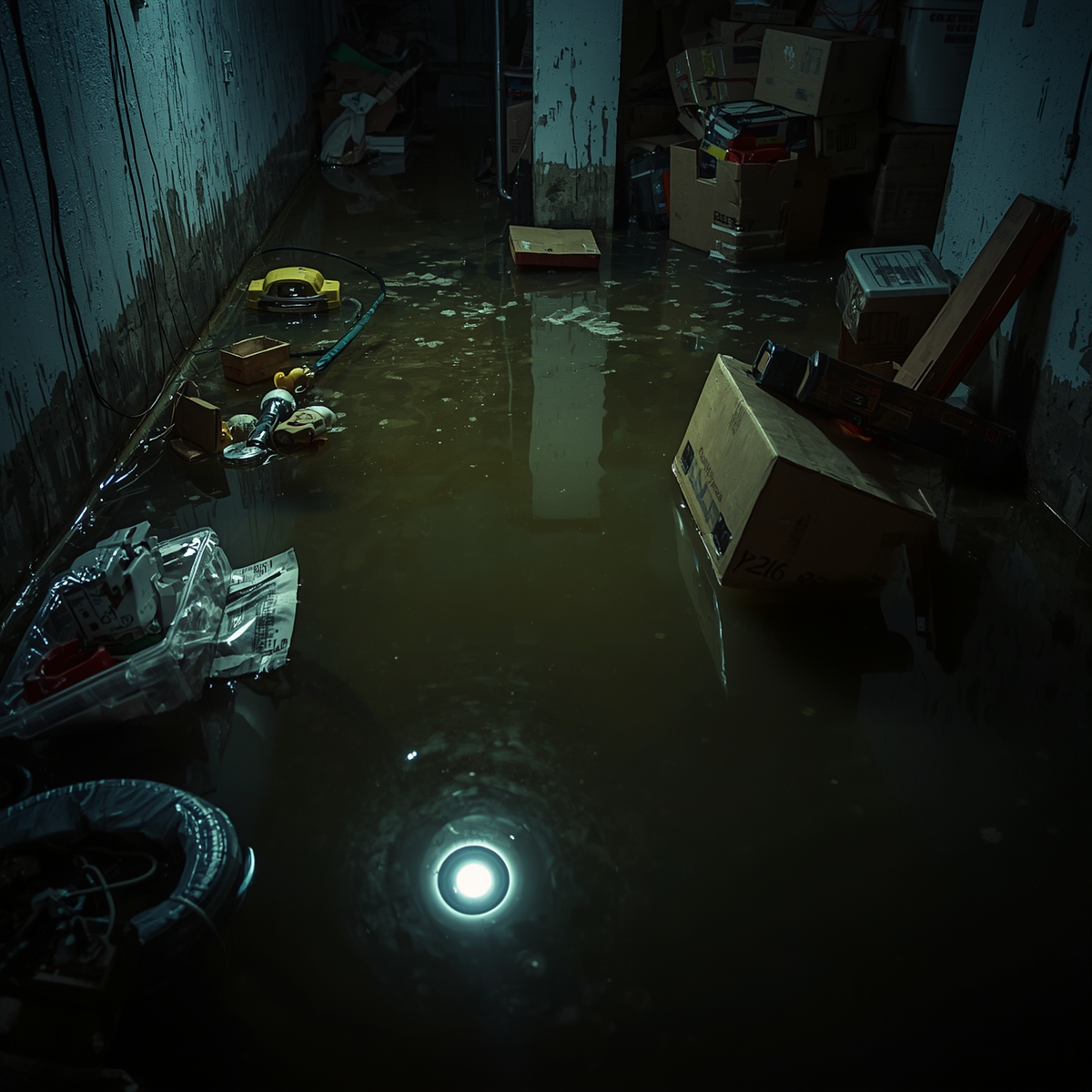
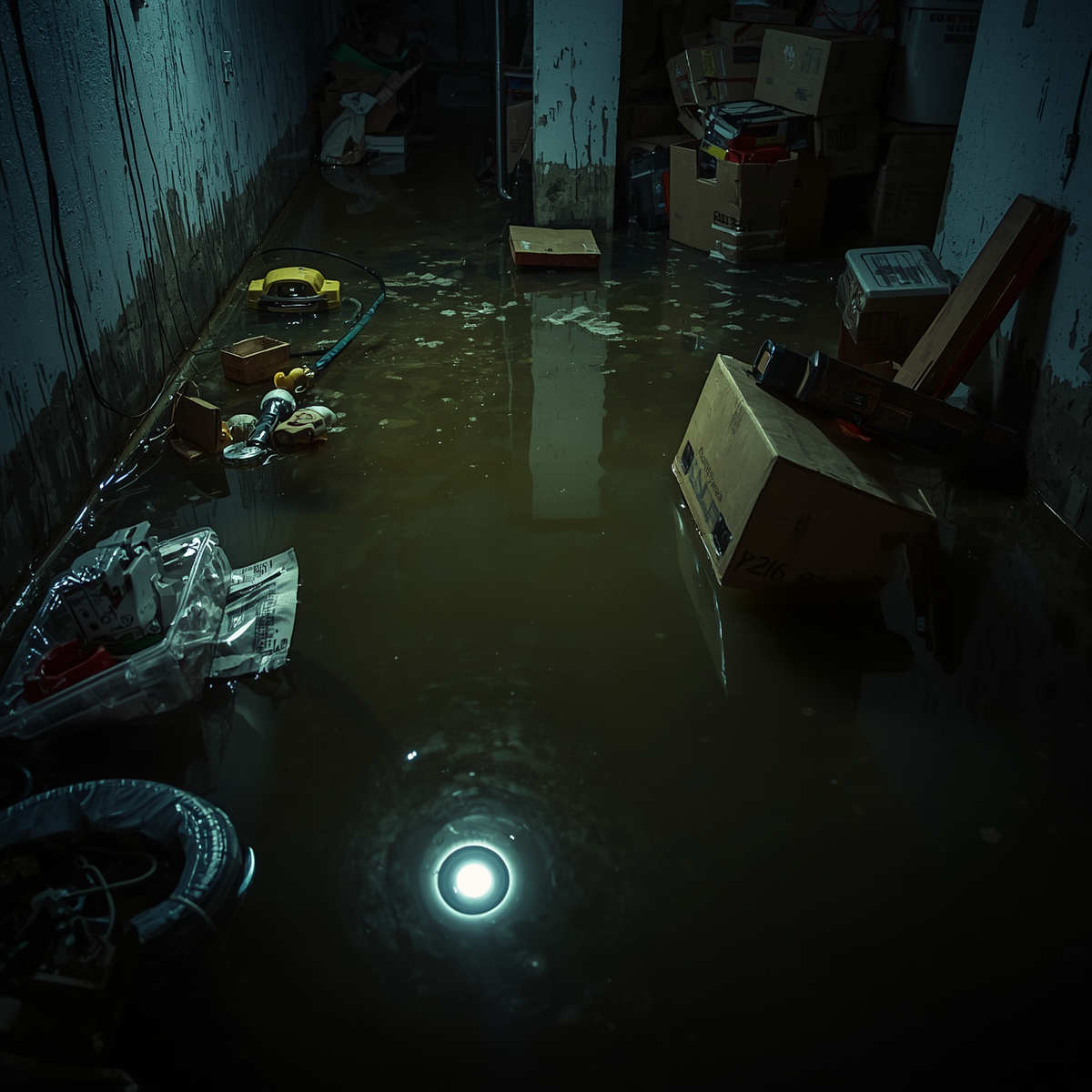
If you're reading this right now with water in your basement, take a breath. We know this is one of the most stressful things a homeowner can face — and you found the right place. Here is exactly what to do in the next 60 minutes — step by step — to protect your home, your family, and your insurance claim.
Step 1 — Stay Safe First
Before you do anything else, do not walk into a flooded basement if there is any chance of electrical hazard. Water and electricity are a deadly combination. If your electrical panel is in the basement or near the water, go to your main breaker outside or in your garage and shut off power to the affected area first. If you're unsure, call your utility company or stay out until a professional arrives.
Step 2 — Stop the Water Source If You Can
If the flooding is coming from a burst pipe, overflowing appliance, or internal source — shut off your main water supply immediately. Your main shutoff is usually located where the water line enters your home, often near the water heater or in a utility area. Turn it clockwise to close. If the water is coming from outside — heavy rain, storm surge, or groundwater — you cannot stop the source, so focus on protecting what's inside.
Step 3 — Do NOT Use a Regular Vacuum
This is one of the most common mistakes homeowners make. A regular household vacuum or shop vac is not designed for water extraction and can create electrocution hazards. Do not use it. Professional water extraction equipment removes water dramatically faster and more completely than any consumer tool.
Step 4 — Move Valuables and Furniture Immediately
While you wait for help to arrive, move anything of value off the floor if it is safe to do so. Electronics, documents, photos, rugs, furniture — get them elevated or out of the affected area. Every minute counts because water wicks upward into furniture legs, drywall, and insulation faster than most people realize.
Step 5 — Do NOT Turn On Ceiling Fans or HVAC
If your ceiling shows any signs of water damage — discoloration, sagging, or dampness — do not turn on ceiling fans or your HVAC system. Ceiling fans can fail catastrophically when wet. HVAC systems can spread mold spores through your entire home if activated during a water damage event.
Step 6 — Document Everything Before Cleanup Begins
Take photos and video of every affected area before anyone touches anything. Walk through every room. Open every closet. Get close-up shots of water lines on walls, damaged flooring, and affected belongings. This documentation is critical for your insurance claim — and the more thorough it is, the better your claim outcome will be.
Step 7 — Call Your Insurance Company
Call your insurance company or agent to report the loss as soon as possible. Most policies require prompt notification. Have your policy number ready. Write down the name of every person you speak with and the time of the call. Ask for a claim number before you hang up.
Step 8 — Call a Certified Restoration Professional
This is not a job for a general handyman or a rental dehumidifier from Home Depot. Water damage restoration requires professional extraction equipment, commercial dehumidifiers, thermal imaging cameras, and moisture meters to verify that drying is complete — not just on the surface but inside walls, subfloors, and structural cavities where mold grows invisibly.
When you call Q Flood Recovery at 862-485-2526 you reach a real person immediately — day or night, weekend or holiday. We understand what you're going through. We've helped hundreds of Morris County families through exactly this moment and we'll be there for you too. Our friendly, certified team moves fast because we know every minute matters.
Why the First 24-48 Hours Are Critical
Water damage follows a predictable and devastating timeline if not addressed immediately. Within the first hour water spreads horizontally across floors and begins wicking upward into walls. Within 24 hours drywall begins to deteriorate, wood begins to swell and warp, and mold spores — which are always present in the air — begin to find the moisture they need to germinate. Within 48 hours mold can become visible and structural damage accelerates significantly. Within a week what started as a manageable water extraction job can become a full gut renovation.
Speed is everything. The difference between a $5,000 restoration job and a $25,000 reconstruction project is often measured in hours.
What About Renters?
If you are renting your home or apartment in New Jersey, call your landlord immediately and document that you made the call — text is better than phone for this because it creates a timestamp. Then call your renter's insurance if you have it. Your landlord is responsible for the structure of the building but your personal belongings may only be covered by your own renter's policy.
What About Finished Basements?
Finished basements are some of the most costly water damage scenarios because water infiltrates behind drywall, under luxury vinyl plank or carpet, and into insulation — all of which must be removed to dry properly and prevent mold. If your finished basement has flooded, do not assume it is fine because the surface looks dry. Hidden moisture inside walls and under flooring is where the real damage happens. Thermal imaging cameras are the only way to know for certain what is wet and what is dry.
Serving Morris County NJ and Surrounding Areas
Q Flood Recovery provides emergency basement flooding cleanup and water damage restoration throughout Morris County, Somerset County, and Northern New Jersey including Morristown, Denville, Randolph, Roxbury, Chester, Mendham, Long Valley, Basking Ridge, Bridgewater, Madison, Chatham, Florham Park, Boonton, Dover, Washington Township, Mount Olive, Flanders, Hopatcong, Pompton Lakes, and Ringwood.
We are your neighbors. We answer every call personally. We treat your home like it belongs to someone we love.
Available 24/7. IICRC Certified. Fully Insured. Hablamos Español.
📞 862-485-2526 | tere@qfloodrecovery.com | www.qfloodrecovery.com
Contact
Get in touch for immediate assistance.
Follow
Connect
+1 862 485 2526
Alternative line (862) 200 7848Alternate
© 2025. All rights reserved.