Burst Pipes in NJ Winter — Why Morris County Homes Get Hit Hard Every Year
Every winter, burst pipes send Morris County homeowners into panic mode. Here's why it keeps happening in our area — and what to do the moment it does.
7/1/20264 min read
It's 6am on a Tuesday. You stumble downstairs to make coffee and there's water coming out from under the bathroom door. Not a little water. A lot. Your first thought isn't logical — it's just panic. You stand there for a second not even knowing what to grab first.
That's the call we get. A lot. Especially in January and February in Morris County, when temperatures swing from 15 degrees at night back up to 40 the next afternoon. That freeze-thaw cycle is brutal on older pipes — and a lot of the homes in Chester, Mendham, Roxbury, and Long Valley were not built for it.
Why older Morris County homes are especially vulnerable
The housing stock in towns like Chester, Mendham, Roxbury, and Long Valley was built decades ago — some of it much longer. The insulation in exterior walls and crawl spaces wasn't designed to today's standards, and pipes that run through unheated garages, basements, or against exterior walls are vulnerable every single winter.
The freeze-thaw cycle we get in NJ is actually worse than a sustained deep freeze. When temperatures swing up and down over a few days, pipes expand and contract repeatedly. That's when they give out — sometimes not even during the coldest night, but the morning after when things start to warm up.
The 10 minutes that matter most
When a pipe bursts, the first thing to do is find your main water shutoff and turn it off. Every adult in your household should know where this is before there's ever an emergency. After that, call your insurance company and a restoration team at the same time — not one after the other.
Why both at once? Because the sooner a restoration crew documents the damage, the stronger your insurance claim. Waiting even a few hours changes the picture.
What "drying out" actually means
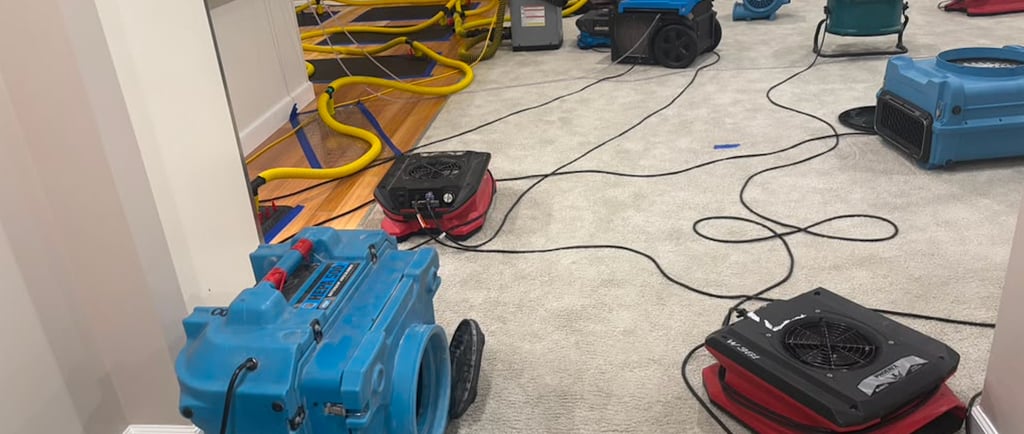
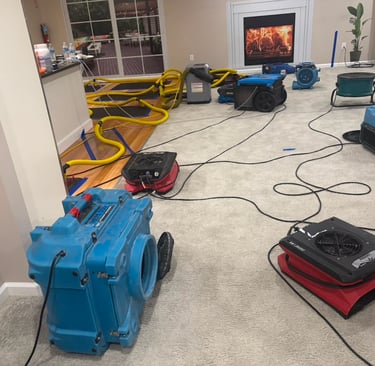
Water from a burst pipe doesn't stay where you can see it. It moves — under flooring, inside walls, into insulation. In the finished basements common throughout Morris County, that means you're dealing with drywall, carpet, and subfloor that all absorb moisture fast.
Industrial drying equipment needs to run for several days to pull that moisture out properly. If someone tells you your home is dry after one day, ask for moisture readings. Actual drying takes 3 to 5 days minimum. Anyone who tells you otherwise is cutting corners.
We're a local, family-run team. We're available 24/7, and when you call us a real person picks up — not a voicemail.
📞 (862) 200-7848 | (862) 485-2526 🌐 qfloodrecovery.com
-------------------------------------------------------------------------------------------------------------------------------------------------------------
Son las 6 de la mañana de un martes. Bajas a preparar el café y hay agua saliendo por debajo de la puerta del baño. No es poca agua. Es mucha. Tu primer pensamiento no es lógico — es puro pánico. Te quedas parado un momento sin saber ni qué agarrar primero.
Esa es la llamada que recibimos. Mucho. Especialmente en enero y febrero en el Condado de Morris, cuando las temperaturas bajan a bajo cero de noche y suben a 7 u 8 grados al día siguiente. Ese ciclo de congelamiento y deshielo es brutal para las tuberías viejas — y muchos de los hogares en Chester, Mendham, Roxbury y Long Valley no fueron construidos para aguantarlo.
Por qué los hogares más antiguos del Condado de Morris son especialmente vulnerables
Muchas de las casas en esta área tienen décadas de antigüedad — algunas mucho más. El aislamiento en las paredes exteriores y los espacios de rastreo no fue diseñado con los estándares de hoy, y las tuberías que pasan por garajes sin calefacción, sótanos, o contra paredes exteriores son vulnerables cada invierno.
El ciclo de congelamiento y deshielo que tenemos en NJ es en realidad peor que un frío sostenido. Cuando las temperaturas suben y bajan repetidamente en pocos días, las tuberías se expanden y contraen una y otra vez. Ahí es cuando ceden — a veces no durante la noche más fría, sino a la mañana siguiente cuando todo empieza a calentarse.
Los 10 minutos que más importan
Cuando una tubería revienta, lo primero que debes hacer es encontrar la llave de paso principal del agua y cerrarla. Todos los adultos en tu hogar deberían saber dónde está esto antes de que haya una emergencia. Después de eso, llama a tu compañía de seguro y a un equipo de restauración al mismo tiempo — no uno después del otro.
¿Por qué los dos a la vez? Porque entre más rápido un equipo de restauración documente el daño, más sólido será tu reclamo de seguro. Esperar aunque sea unas pocas horas cambia el panorama.
Lo que "secar" realmente significa
El agua de una tubería reventada no se queda donde la puedes ver. Se mueve — por debajo del piso, dentro de las paredes, en el aislamiento. En los sótanos terminados que son tan comunes en el Condado de Morris, eso significa que estás lidiando con paneles de yeso, alfombra y subpiso que absorben la humedad rápidamente.
El equipo de secado industrial necesita funcionar varios días para sacar esa humedad correctamente. Si alguien te dice que tu casa está seca después de un día, pide las lecturas de humedad. El secado real toma un mínimo de 3 a 5 días. Cualquiera que te diga lo contrario está tomando atajos.
Somos un equipo local y familiar. Estamos disponibles las 24 horas, los 7 días de la semana — y cuando llamas, una persona real contesta. No un buzón de voz.
📞 (862) 200-7848 | (862) 485-2526 🌐 qfloodrecovery.com
Contact
Get in touch for immediate assistance.
Follow
Connect
+1 862 485 2526
Alternative line (862) 200 7848Alternate
© 2025. All rights reserved.